← Home

AI

13 posts

Thought AIDevelopment

LeetCode Made Coding Fun Again

Oct 18, 2026

Many of us have already fully switched to AI-powered development. We write specs, create skills, connect MCP and run several agents in the background, after which we do a very boring code review of the result.

For almost all of this year I’ve been writing code with the help of AI, and it’s definitely productive (otherwise I wouldn’t be doing it), but it’s not as fun as it was before. Writing code is like LEGO or puzzles, first you come up with what the solution should look like, then what the first steps should be, and then you write the code, some things work right away, and some things break along the way and you rewrite what doesn’t work. And now imagine if you asked a robot to put a puzzle together for you. It’s put together, the result is there, but did you enjoy it?

I’ve heard an opinion from other developers, “Then write code without AI, what’s the problem?”, but unfortunately it’s not a solution. I think you’ve played computer games like GTA SA, where you can enter the cheat code “HESOYAM” and get a huge amount of money right away. Will you be just as motivated to earn this money in the game honestly, if you’ve used this cheat code once? Most likely not. You’ll consider it a waste of time, because you can just type a command. It’s the same with AI development. It’s very hard to make yourself sit down again and do everything by hand, when you can write a prompt and an AI agent will do it for you.

And for some time it was really sad for me. On the one hand, AI lets us be productive, make PoCs quickly and get rid of boring routine work, but on the other hand it takes away the reason why many of us fell in love with programming.

When I was just starting to learn programming in 2016-2017, I really loved challenges (I still love them, but back then it was especially important). When our C++ teacher gave us a problem on algorithms or data structures, I wanted to do it better and faster than all my classmates. It was a competition. And solving some of the problems took several days (or rather sleepless nights), for example tic-tac-toe where you play against artificial intelligence (so-called, not an LLM), or the 15 puzzle in the console.

When we finished with C++, I switched to Java/C#, where I was focused more on OOP, frameworks and patterns than on algorithms. And after that I never went back to them (except for a few tasks at work, when they really came in handy).

And now, in 2026, I’ve started solving problems on LeetCode, and it has literally taken me back to the time when it was interesting for me to write code where you had to think about algorithms, look for optimal solutions (like O(1) memory and O(n) time), and write everything yourself. Now it has become my hobby.
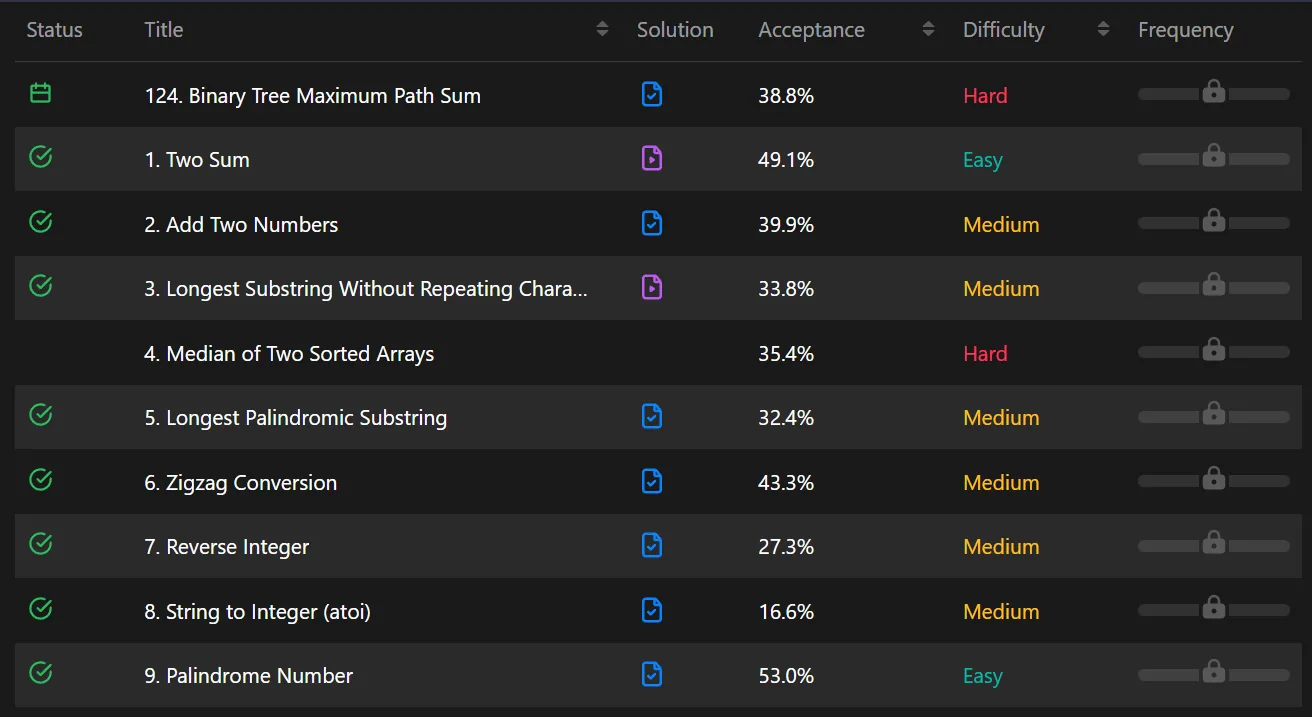
LeetCode problem list with my solved problems

Some of you might think, “Why doesn’t AI get in the way of enjoying LeetCode too?” On LeetCode nobody needs the finished solution, only the process matters. Asking AI to solve a problem there is like asking a robot to put together a puzzle that you bought for fun.

I ignored LeetCode for a long time, because programming at work was enough for me. Now, when AI writes the code at work, LeetCode has become a place where I can get a challenge again.

As for the platform itself, LeetCode is not the only one you can use (it’s just one of the most popular). You can also use Codeforces, Codewars and so on.

Also, I want to mention “Advent of Code”, which is an annual event (every December) where you solve interesting programming puzzles. Here you move forward through the story and face really varied problems.
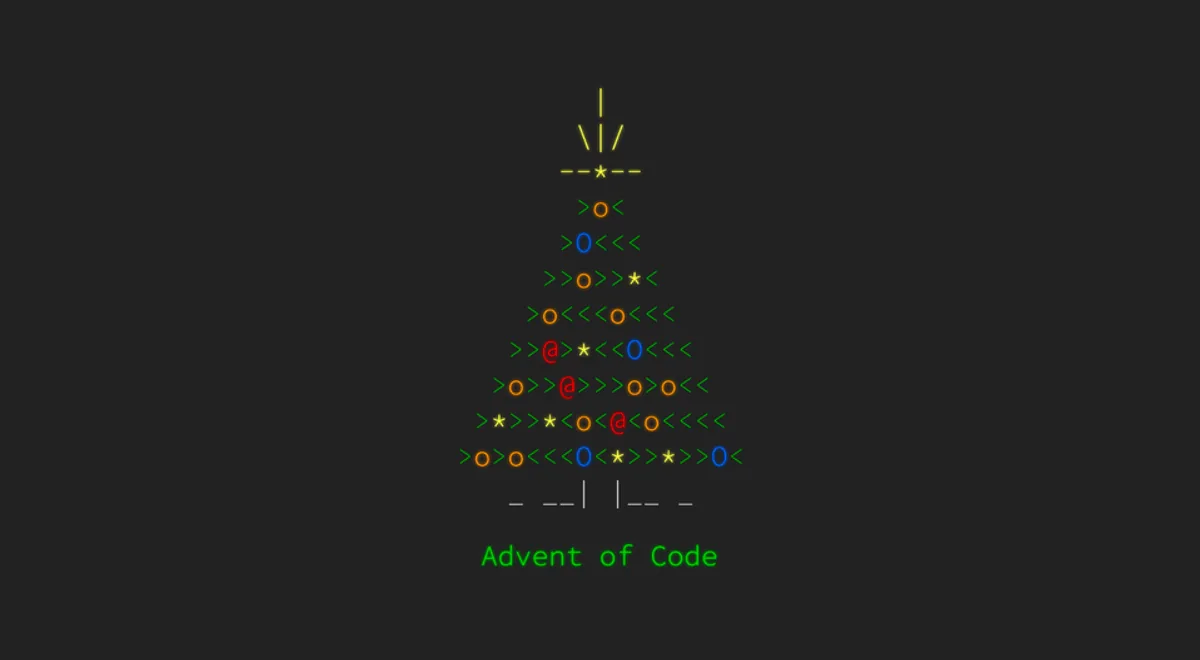
Advent of Code Christmas tree made of ASCII characters

A question to my readers, how do you manage to get back the enjoyment of programming?
Read more →
Thought AIClaude Code

Tip: Back Up Your Claude Code Infrastructure

Sep 30, 2026

One of the main rules in software engineering is to always have a backup.

Many of us improve our Claude workflow every day. We create and edit skills and hooks, update CLAUDE.md and so on. I recommend creating a private repository and committing your ~/.claude folder.

This is useful in several cases:

  • It protects you if something happens to your .claude folder
  • You keep previous versions of your skills and CLAUDE.md
  • You see in git what has changed. This makes it much easier to track the changes that Claude makes to CLAUDE.md by itself (it often writes there something different from what you asked)

Make sure to add these to your .gitignore. The .credentials.json file, settings.json if it contains tokens, and also plugins, history.jsonl, paste-cache, file-history and the projects folder, because they hold tokens and session transcripts with work code.

Here’s an example of my .gitignore below (feel free to use it as a starting point):

# Back up only what you author in ~/.claude. Everything else stays out by default:
# credentials, session transcripts, caches, installed plugins.
# Keep your own files in another folder here? Add a !/<folder>/ line for it.
/*

!/.gitignore
!/README.md
!/CLAUDE.md
!/rules/
!/skills/
!/commands/
!/agents/
!/hooks/
!/output-styles/
!/keybindings.json
!/statusline*

# Hook registration, permissions and the status line live here.
# Uncomment only after every token in its env block moved to a real environment variable.
# !/settings.json

# Auto-memory: keep only memory/ from each project, never the session transcripts
!/projects/
/projects/*/*
!/projects/*/memory/

# Synced by the Claude apps, not authored here
/skills/synced/

# Safety net inside allowed folders
.env*
*.pem
*.key
node_modules/
__pycache__/
Read more →
Thought AIAgentsOpen-source

Orca: Agent Development Environment (ADE) for shipping with coding agents

Sep 26, 2026

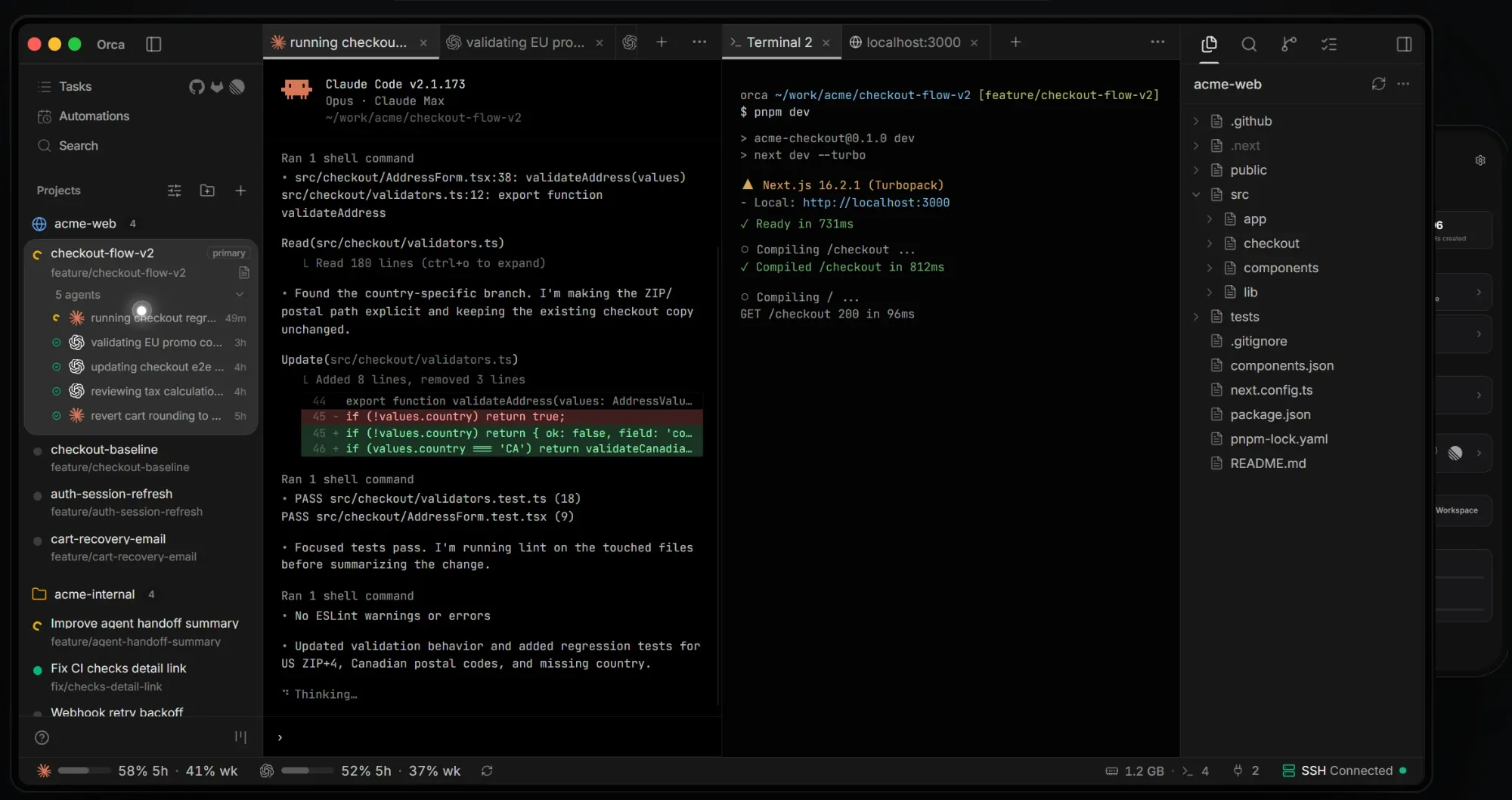
A few days ago I heard from colleagues about an interesting open-source project: Orca, it’s an agent IDE for agentic coding that lets you work on several tasks at the same time in an efficient way. It is based on the idea of git worktree (a separate copy of the repository), which lets agents avoid conflicts when they make changes for different tasks at the same time.

Orca doesn’t have its own model. It runs the CLI agents you already have installed, on your own subscriptions. On top of that it adds what you need when you’re managing agents instead of writing code. There’s a diff view where you can comment on specific lines and send the comments back to the agent. Each worktree gets a browser so you can check the UI. And a phone app lets you know when an agent is done.

I haven’t tested it myself. I prefer to work more in Claude Desktop, which supports a lot of features by default (including git worktree), but if you work with pure CLI, then Orca can be really useful for you.

The project is open-source, written in TypeScript, has about 80k stars on GitHub and is actively developed, you can also contribute to it, but there are already 3.6k pull requests. Looks like AI agents are working day and night 😄

What do you think about it? Or maybe you use other ADEs (Agent Development Environments)?

Orca interface with several coding agents working on different tasks in parallel

Read more →
Announcement AILecture

Modern AI Security: Challenges in the Era of Large Language Models

Jun 8, 2026

Tomorrow there is a lecture on Modern AI Security: Challenges in the Era of Large Language Models by Jelena Milosevic, Professor of Generative AI at the University of Applied Sciences and Arts Northwestern Switzerland (FHNW).

I met Jelena during my trip to Zurich for the GenAI conference this year. She leads research and teaching in Generative and Agentic AI at FHNW, with a focus on secure and efficient deployment and on-device intelligence. Her background combines academic research and industry experience, including work on multimodal document understanding, LLM benchmarking, production-ready ML systems, runtime malware detection, network security, and adversarial machine learning.

Highly recommend attending!

  • Date: 9 June 2026
  • Time: 11:00–12:00
  • Location: TU Wien, EI 4 Reithoffer HS, Gußhausstraße 25–25a, 1040 Vienna (CF0245)
  • Virtual location: Zoom

The full recording of the lecture is available here: watch the video.

TU Wien logo

Read more →
Thought AI

Mass layoffs caused by AI

Jun 4, 2026

Talk about AI causing layoffs started back in 2024.

At that time, many companies were under pressure because of the global economy. Budgets were tight, investors demanded better efficiency, and companies wanted to look “AI-driven” and modern. In this situation, layoffs were often explained as “AI optimization.”

But did AI really automate all of this work? It’s hard to say for sure. However, we can look at how AI is actually being adopted in companies.

According to McKinsey’s The State of AI in 2025, only about a third of companies have even begun to scale AI beyond pilots, and just 7% have deployed it across the whole organization, even though 88% already use AI regularly in at least one function.

From my own experience talking to AI enablement specialists, attending conferences, and doing research, the real level of AI adoption inside companies is often even lower than what companies publicly claim.

Having a ChatGPT subscription or an AI assistant that helps with emails does not mean AI is fully integrated into company workflows. The field is moving very fast, and standards keep changing. What was “best practice” a few months ago can already be outdated. As a result, adoption is uneven: some teams use AI agents heavily, while others don’t even know what MCP or agent workflows are.

Recently, I wrote an article called “Will AI Replace Software Developers?”, where I explained why AI will not simply replace developers. And I still believe that AI itself will not take your job.

However, there is an important point I didn’t fully cover there. Your job might not be replaced by AI, but it can be reduced by management decisions.

Does AI make developers faster? Yes, it does. But some managers take a very simple view: if each developer produces more code, we can reduce the team size. The problem is that writing code is only a small part of software development. With AI, we do write more code. But we also spend more time on planning, testing, code review, validation, and system design discussions. Productivity increases, but it doesn’t mean we need fewer people in a linear way.

Even if leadership understands this and avoids the AI hype, there is another issue: the cost of using AI.

Most companies already operate under tight budgets. Now they also need to pay for AI models, infrastructure, integrations, and trainings.

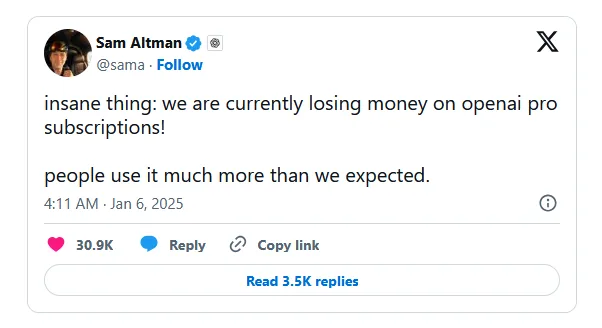
Many people forget that today’s AI pricing is largely held up by investors. Sam Altman has admitted that OpenAI loses money even on the $200 ChatGPT Pro subscription, and providers have kept prices below cost for years to capture the market. Even now, the monthly cost for advanced AI tools can become significant for large companies. This means companies are not only paying for growth, but also for maintaining their AI strategy.

Sam Altman tweet: insane thing: we are currently losing money on openai pro subscriptions, people use it much more than we expected.

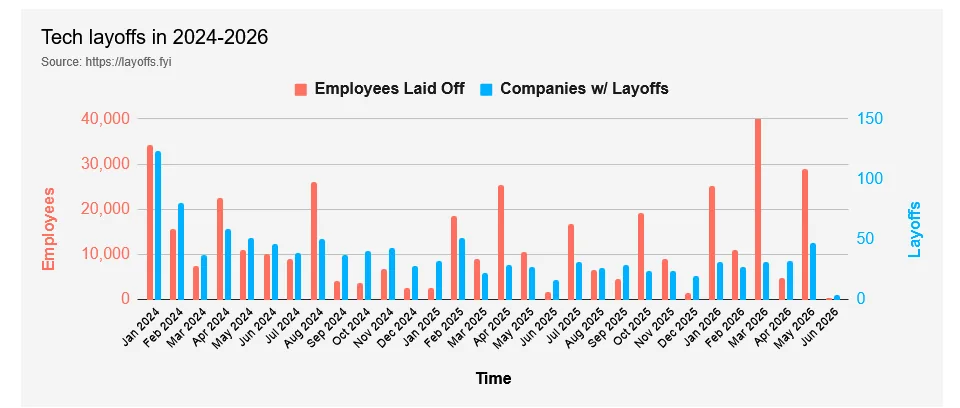
That’s why we still see layoffs in tech. According to layoffs.fyi, the industry cut around 122,500 jobs in 2025, fewer than the 153,000 in 2024, but the wave has not stopped. AI was named as a direct reason in less than 8% of announcements, so it was rarely the only factor. Often, it’s not because AI fully replaced people, but because companies need to reallocate budgets to expensive AI infrastructure and projects.

Tech industry layoffs chart

So when we hear about mass layoffs, it’s important to understand: AI is rarely the only reason.

More often, it’s a combination of:

  • global economic pressure
  • investor expectations
  • budget constraints
  • AI hype and unrealistic expectations
  • rising infrastructure and model costs

All of these together are shaping today’s job market.

I don’t believe AI will replace most professionals. But I do believe AI is already adding pressure to an already difficult market.

The good news is that these cycles don’t last forever. The tech industry has gone through crises and corrections before. Over time, things stabilize, companies adapt, and the job market finds a new balance.

No one is safe from layoffs.

But your skills, reputation, network, and ability to adapt greatly increase your chances of quickly finding a new and even better opportunity. So keep learning, keep building your skills, stay active on LinkedIn, and stay aware of how the industry is changing.

In the long run, that is still the best protection against change.

Read more →
Thought AIConference

First impressions from GenAI Zurich 2026

Apr 1, 2026

Hi there, I just arrived in the beautiful city of Zurich from Vienna.

Today was the opening day, and it was packed with insightful talks, great energy, and lots of networking with AI professionals from all over the world. There were many interesting discussions around agent-based development, MCP, OpenClaw, and the security challenges we’ll be facing in the near future.

Two talks really stood out to me:

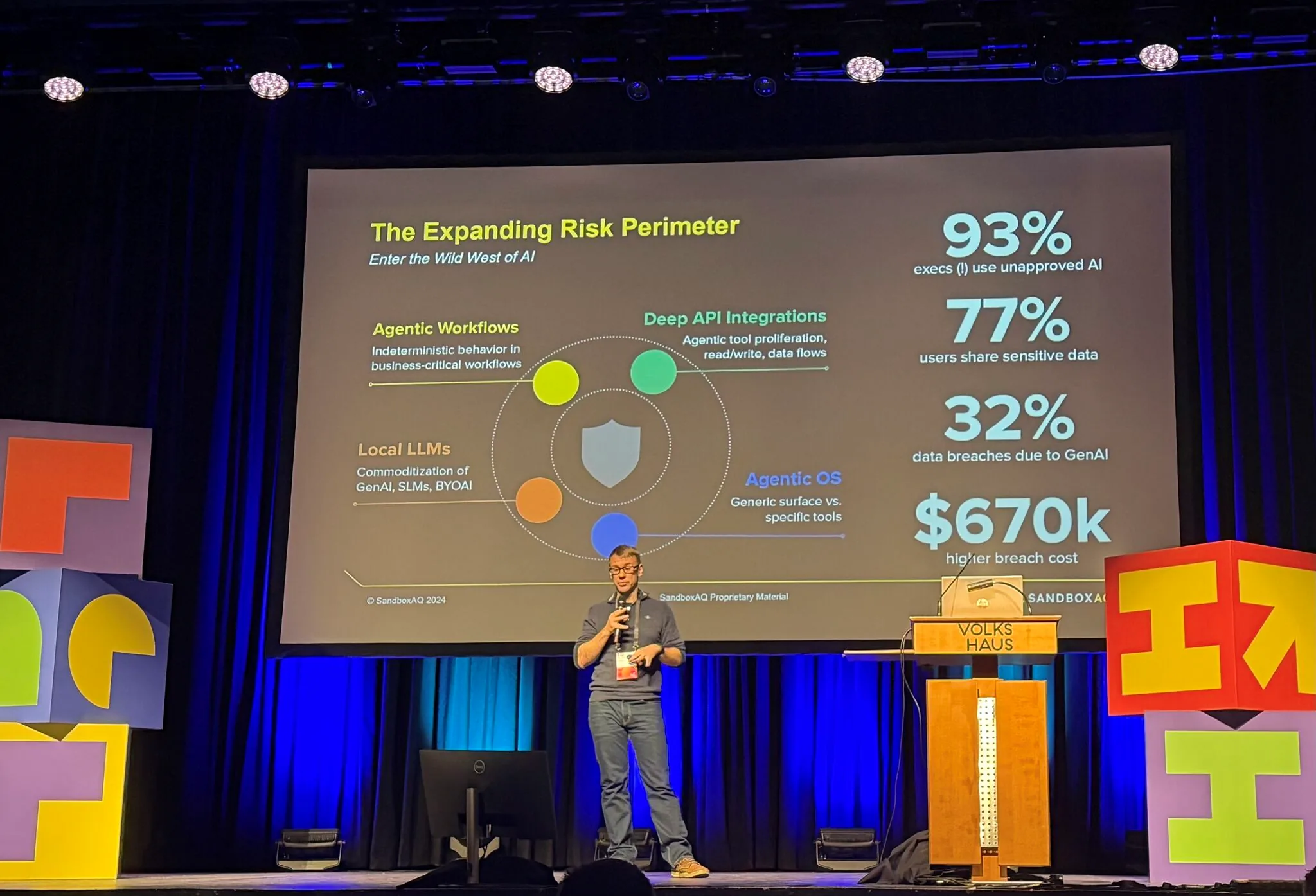
  • “Shadow AI: The Trojan Horse of AI Security” by Timo Bozsolik from SandboxAQ
  • “In Search of Winning AI Use Cases” by Slavik Dimitrovich from Amazon Web Services

The main takeaway that came up again and again was “we still need people”, and it’s absolutely true. Without human-in-the-loop, senior guidelines, and code review, it’s hard to imagine building any serious enterprise solution.

At the same time, many companies, including large IT enterprises, still struggle with AI adoption: the field moves too fast, part of the workforce can’t keep up, and documentation and best practices are largely missing. That’s why the AI Enablement role is so important right now.

There were also several interesting talks on Agentic AI vulnerabilities, one of which I mentioned above. This topic deserves a separate discussion on its own. Practices like meta-prompts can’t guarantee 100% protection, so above all, rely on sandboxing and strict permission limits for your LLM.

The day flew by. I had the chance to meet inspiring people, exchange ideas, and learn a lot. Looking forward to another busy and insightful day tomorrow!

Big thanks to the GenAI Zürich team for organizing such a great event and helping make Europe a global AI hub.

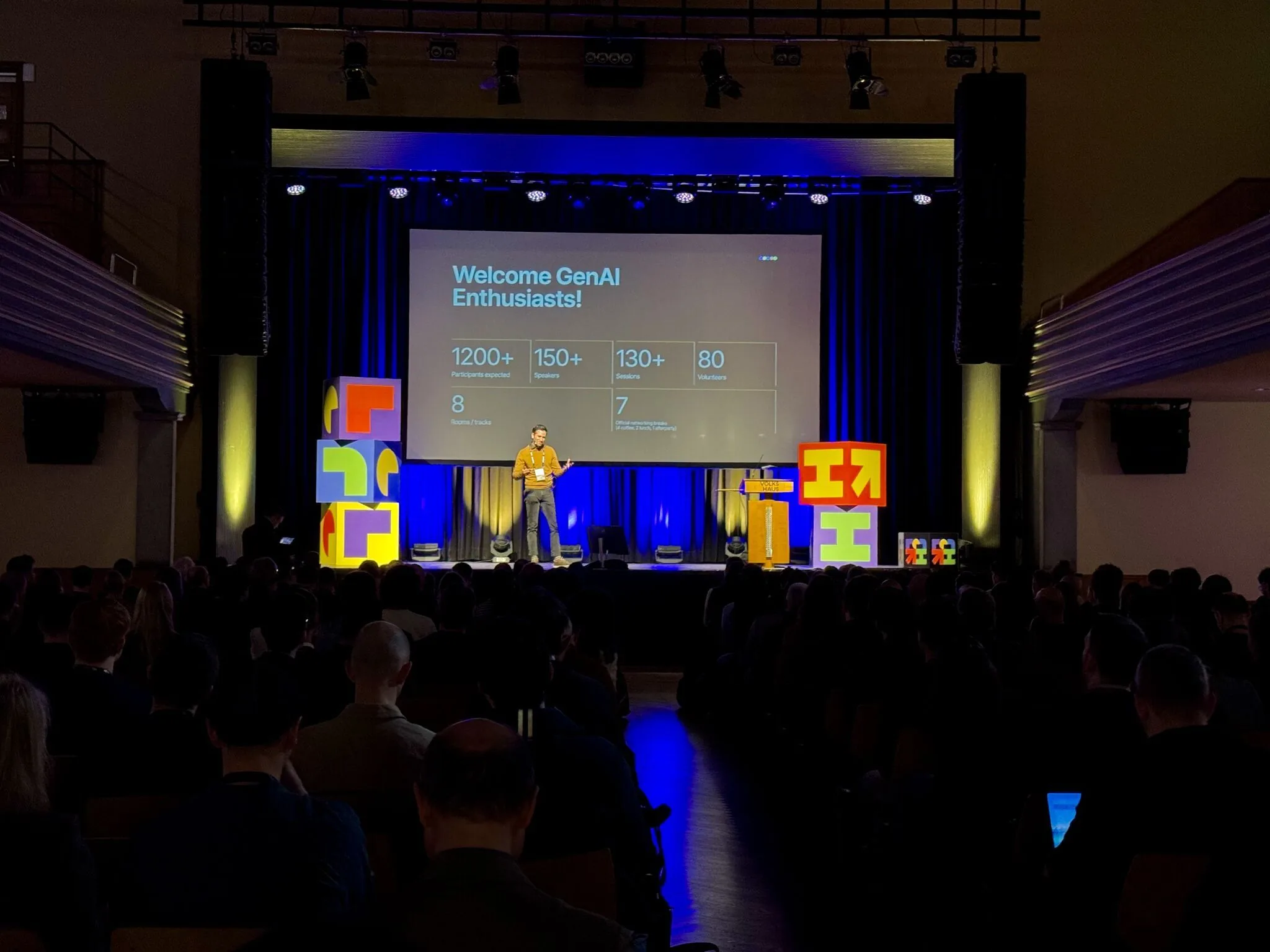
GenAI Zurich 2026 opening stage Keynote slide on AI risk perimeter Conference sponsors and partners board
Read more →
Announcement AIConference

Generative AI conference is coming soon to Zurich, Switzerland

Mar 17, 2026

Hi there,

At the GenAI conference, there will be many interesting talks about how to implement AI in your business, the current capabilities of LLMs, and AI agent security, one of the most trending topics right now.

I will share all the key insights from the conference, so you won’t miss anything. But if you have the chance, I highly recommend attending in person.

You’ll have a great opportunity to expand your network, connect with professionals from different industries, and meet our team in person.

Tickets are still available.

Date: April 1–2.

GenAI Zürich 2026 hero image
Read more →
Thought AI

Austria AI Community

Mar 2, 2026

We’ve just launched a new group. It’s an English-speaking community for everyone in Austria who’s interested in AI: developers, founders, business professionals, students, researchers, or simply curious minds exploring the field.

The idea is simple: create a space where we can connect, share knowledge, discuss trends, support each other, and maybe even build cool things together. AI is moving fast, and I believe Austria has huge potential.

Let’s bring the community closer: Austria AI Community

Read more →